Last updated:
Pholiota Nameko
"Nameko, Butterscotch Mushroom"
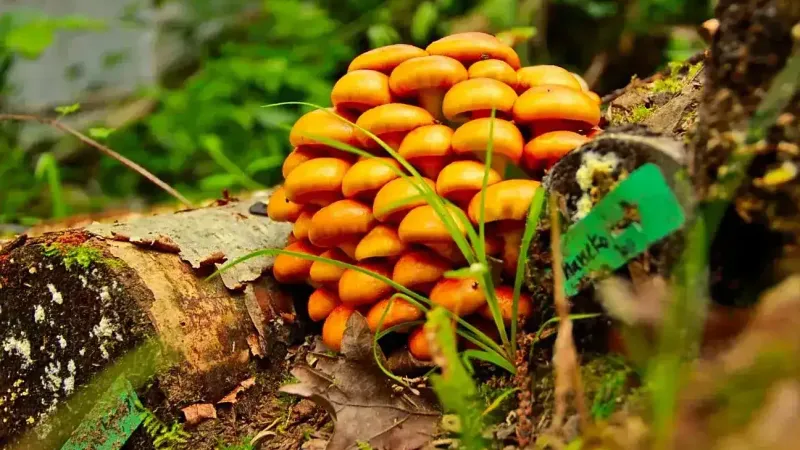
Pholiota Nameko fruiting bodies
Scientific Classification
Kingdom:Fungi
Division:Basidiomycota
Class:Agaricomycetes
Order:Agaricales
Family:Strophariaceae
Genus:Pholiota
Frequently Asked Questions
- What is Nameko?
- Nameko (Pholiota Nameko) is a mushroom species, belonging to the Strophariaceae family. It is studied for its biological characteristics and is documented in the ShroomSpy mycology database.
- Is Nameko edible?
- edible
- What effects does Nameko produce?
- Nameko is associated with the following effects: Energy. Individual experiences vary based on dose, set, and setting.
- What is the scientific classification of Nameko?
- Nameko belongs to the kingdom Fungi, division Basidiomycota, class Agaricomycetes, order Agaricales, family Strophariaceae, genus Pholiota. Its scientific name is Pholiota Nameko.
About
Pholiota nameko, commonly known simply as Nameko, is a small, amber-brown, slippery mushroom highly prized in Japanese cuisine. Its gelatinous coating and savory, nutty flavor make it a popular addition to soups, stir-fries, and hot pots. Native to East Asia, it grows naturally on hardwood logs but is now widely cultivated both commercially and domestically due to its culinary and nutritional appeal.
History
Nameko has been cultivated in Japan for centuries and is among the most popular cultivated mushrooms in the country, second only to shiitake. In traditional Japanese dishes like miso soup and nabemono, its slick texture and rich umami flavor are considered desirable traits. The mushroom's commercial cultivation began in the mid-20th century, and it has since become available in many international markets, especially in dried or jarred form.
It belongs to the genus Pholiota, which includes many wood-decomposing fungi. Its species name nameko directly refers to its sticky, mucilaginous cap, which plays a role in retaining moisture and aiding in spore dispersal.
Overview
Nameko mushrooms grow in clusters on dead or decaying hardwood, typically oak or beech. The caps are smooth, orange to brown, and covered in a natural gelatinous coating. They usually reach 3–5 cm in diameter. The gills are pale and closely spaced, and the stems are slender and sometimes slightly curved.
Although small in size, Nameko mushrooms are rich in polysaccharides, antioxidants, and ergothioneine, offering immune-supportive and anti-aging properties. They are especially valued for their texture and flavor when cooked, as the gelatinous coating thickens broths and imparts a glossy finish to dishes.
Physical Characteristics
Caps:
Convex, becoming broadly convex to flat in age
Gills:
Adnate to slightly decurrent and close
Cognitive Effects
Energy
Pholiota Nameko is believed to enhance energy levels by improving cellular energy production and increasing oxygen utilization. It may help combat fatigue and improve stamina, making it popular among athletes and individuals seeking a natural energy boost.
Psychoactive Effects
Euphoric
Pholiota Nameko can induce feelings of happiness or excitement.
Perceptual
Pholiota Nameko can cause changes in time perception, spatial perception, and perception of one's own body.
Pharmacology
Helps With
Fatigue
Pholiota Nameko helps in reducing feelings of tiredness and lethargy.
Cholesterol
Pholiota Nameko aids in lowering levels of bad cholesterol in the body.
Stress
Pholiota Nameko has adaptogenic properties, meaning it may help the body adapt to and resist the effects of stress. It is believed to support the adrenal glands, which play a role in regulating stress responses, and promote a sense of calm and overall well-being.
Possible Side Effects
Automation
Overconsumption of Pholiota Nameko can lead to gastrointestinal discomfort.
Dry Mouth
Pholiota Nameko can cause a sensation of dryness in the mouth.
Nameko Products
Explore Nameko products from independent vendors
Similar Species
Key Differences: It can be distinguished from Pholiota Nameko by its gill color, which is brown instead of white or light yellow, and its spore print, which is brown instead of white to cream. Additionally, Galerina marginata usually grows in the fall, while Pholiota Nameko is typically found in the spring.
No image
Key Differences: It can be distinguished from Pholiota Nameko by its gill color, which is brown instead of white or light yellow, and its spore print, which is brown instead of white to cream. Additionally, Galerina marginata usually grows in the fall, while Pholiota Nameko is typically found in the spring.
Mushroom Ratings
4.5
(2)
Based on 2 Reviews
5
★4
★3
★2
★1
★Share your thoughts
If you've consumed this mushroom, share your thoughts with our community
01/29/2025
Zack Mooney
ContentEnergyRelaxedFocusHeadache
Tried Nameko mushrooms and they're really tasty. Earthy flavor that works great in stir fries and soups. The texture is interesting too - slightly slimy but in a good way lol.
Felt more energized and just... content after eating them? Hard to explain but my mood was better. Also got this relaxed feeling and could focus easier on work stuff.
Ate too many the first time and got a headache next day so don't go overboard. But yeah they're a solid addition to meals - taste good and seem to have actual benefits. Worth trying if you like mushrooms
01/29/2025
Sam Matterson
CalmContentCreativityFocusEnergy
Tried Nameko mushrooms in a stir fry and really liked them. Unique texture and this mild buttery flavor that went well with everything. Easy to cook with.
The calm that came after eating was unexpected. Stress from the day just faded and I felt more focused and creative. Energy was good all day too and I felt lighter - digestion seemed better.
No side effects for me which was nice since I've had bad reactions to other mushrooms before. If you want something that tastes good and actually helps you feel better, these work. Good for gut health and just general wellness
References
- Chou a 1, b 1, Yu-Ning Hu b, Hsin-Yu Lu b, Li-Chan Yang d, Kuan-Chen Cheng e, Ping-Shan Lai c, Chang-Wei Hsieh , C., Sung, T., & Hu, Y. (2019). Chemical analysis, moisture-preserving, and antioxidant activities of polysaccharides from Pholiota nameko by fractional precipitation. . https://doi.org/https://doi.org/10.1016/j.ijbiomac.2019.03.154
- Colobig, M. . (2015). Pholiota nameko: A review of its nutritional and medicinal properties. .